Dr. Karen Yeates shared her team’s work on community-led HPV self-sampling and screening in Northern Ontario, highlighting lessons for improving cervical cancer prevention across Canada.
Research and presentations ·
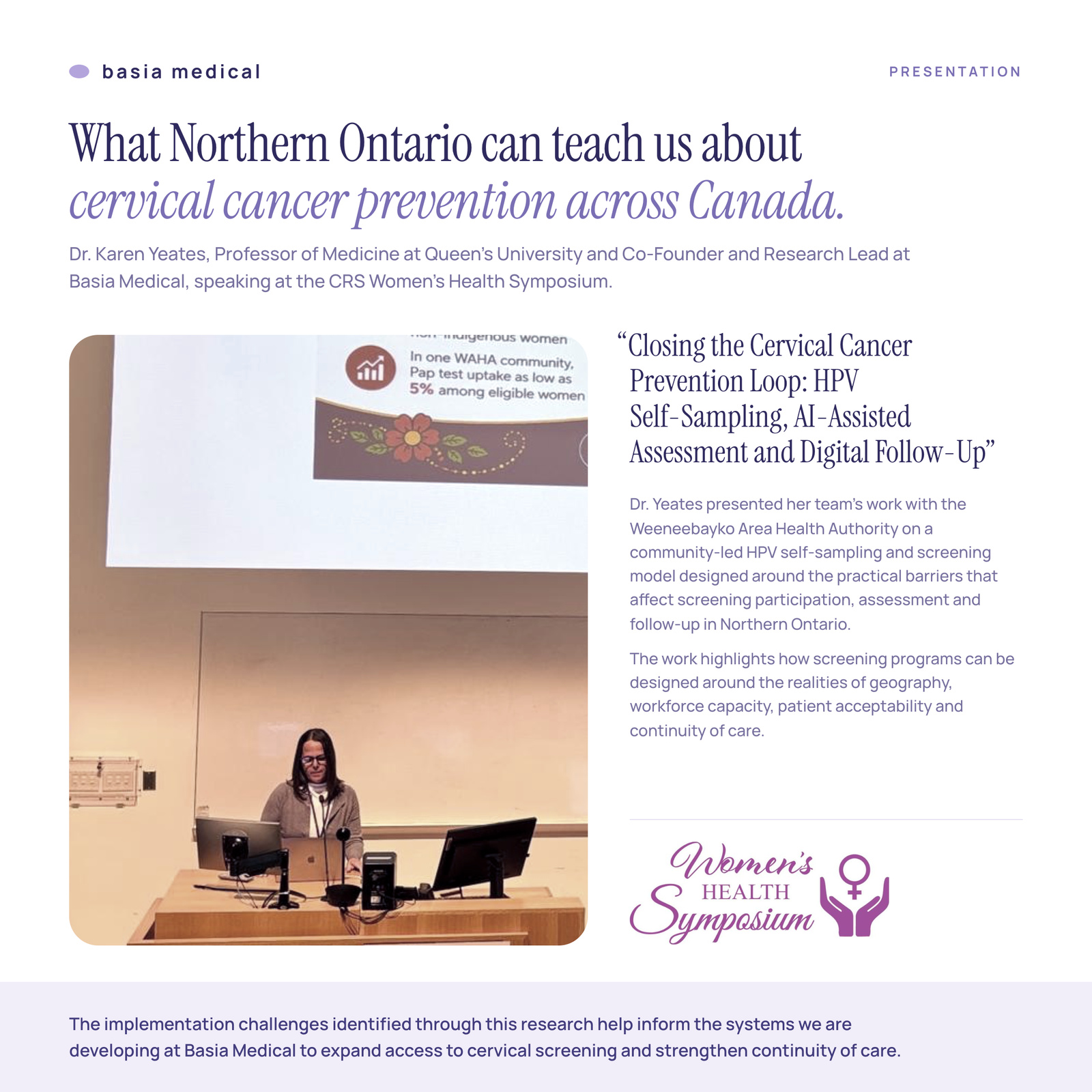
Today, we were pleased to have Basia Medical Co-Founder and Research Lead Dr. Karen Yeates present at the CRS Women's Health Symposium alongside an exceptional group of researchers and clinicians working to advance women's health. The symposium brought together leaders from across the globe to share research and innovation addressing some of the most important challenges in women's health.
Dr. Yeates presented:
"Closing the Cervical Cancer Prevention Loop: HPV Self-Sampling, AI-Assisted Assessment and Digital Follow-Up."
Her presentation highlighted her team's work to establish a community-led HPV self-sampling and screening platform in partnership with the Weeneebayko Area Health Authority, addressing barriers to cervical cancer screening and follow-up in Indigenous communities across Northern Ontario.
The importance of this work extends beyond Northern Ontario. Many of the barriers identified through community-based implementation research, including access to care, workforce limitations, patient acceptability, and continuity of follow-up, continue to affect cervical cancer prevention across Canada. Addressing these challenges is essential to increasing screening participation and reducing the burden of cervical cancer at the population level.
The implementation challenges highlighted through this research also help shape the technologies we are developing at Basia Medical. Our focus is on developing tools that address practical barriers to cervical cancer prevention, including a speculum-free, AI-guided cervical sampling system designed to enable a broader range of trained healthcare professionals to perform cervical examinations and direct cervical sample collection for HPV testing and cytology, together with digital tools that support follow-up and care coordination.
Cervical cancer is one of the most preventable cancers. Advancing prevention requires not only effective screening tests, but evidence-based approaches that improve access, strengthen implementation, and ensure patients remain connected to care throughout the screening pathway.